

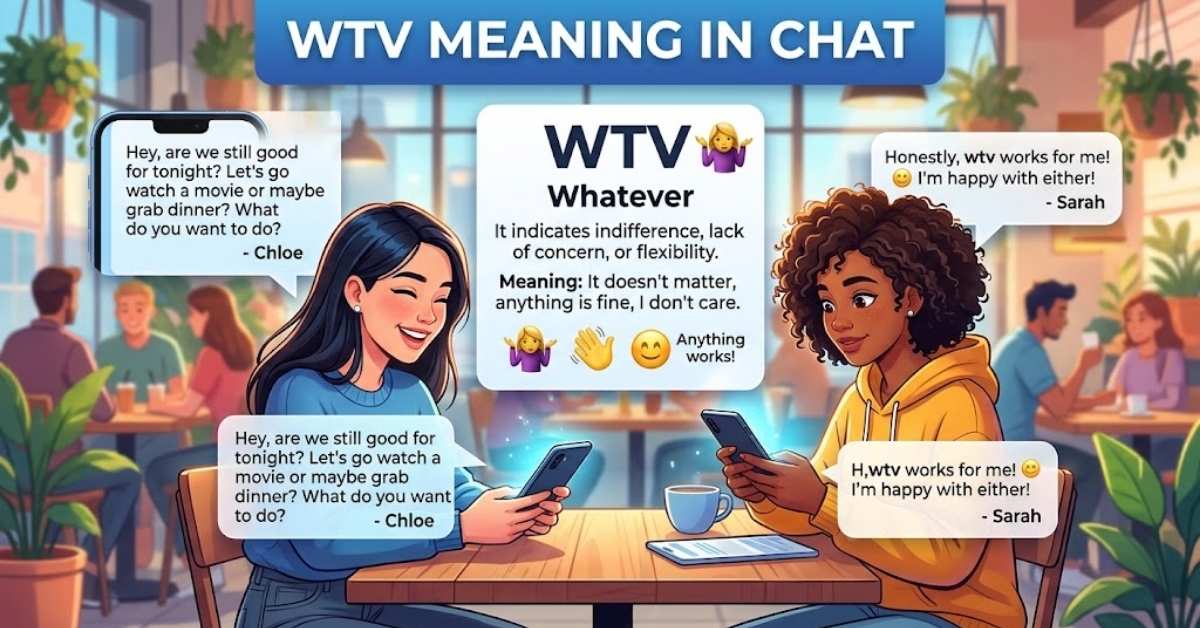
You get a message that says “wtv” and nothing else. Is your friend annoyed? Bored? Just too lazy to type four more letters?Here’s the short answer. WTV meaning in text is “whatever.” People use it when they don’t care much or when any option works for them.
The catch is tone. One tiny word can sound calm, cold, or playful depending on who sends it. This guide shows you how to read it, use it, and reply without making things awkward.
What Does “wtv” Mean in Text?
WTV stands for “whatever.” It’s a slang abbreviation made by dropping the vowels, the same trick that turned “please” into “pls” and “message” into “msg.”
In texting, it works as a quick, low effort reply. It can carry the idea of I don’t care, anything is fine, or it’s not important to me.
You’ll spot it all over modern texting slang and Gen Z slang. It’s fast, it’s casual, and it fits the way people chat on their phones today.
The Most Common Meanings of “wtv” in Text
The WTV short form has more than one job. The tone and context decide which one you’re dealing with. Look at the words around it, the person sending it, and what you just asked.
Here are the four meanings you’ll run into most often.
1. Lack of interest or care
Sometimes wtv simply means indifference. The person doesn’t have a strong opinion, so they leave the decision to you.
Say you ask, “Pizza or tacos?” and get “wtv” back. That’s usually lack of interest in the choice, not in you.
2. Mild frustration or irritation
Other times it signals mild frustration. After a long back and forth, “wtv” can mean “I’m done explaining myself.”
Picture two friends arguing over who forgot to book the table. The last message reads “wtv.” That’s irritation with a side of emotional distance.
3. Agreement without excitement
WTV can also be passive agreement. The person goes along with your idea, but they aren’t jumping up and down about it.
Think of a roommate who answers “wtv works” when you pick the movie. It’s calm acceptance, plain and simple.
4. Ending a conversation
Now and then, it works as a polite door closer. It tells you the other person has nothing more to add.
If a debate about weekend plans stalls and one side says “wtv,” that’s a signal for ending a conversation. Take the hint and move on.
How “wtv” Is Used in Real Conversations
Where you meet wtv changes how it lands. A message in a group chat feels different from one in a work thread. Let’s walk through the usual spots with real chat examples.
Friends & Casual Texting
This is where WTV meaning in chat is easiest to read. Friends use it for movie selection, food choices, and making plans when nobody wants to decide.
You: “Where should we eat?” Friend: “wtv, you pick.” That’s casual texting at its most relaxed.
Instagram & Snapchat
On Instagram and Snapchat, people drop wtv into story replies and quick replies. It often works as a lazy reaction to a post.
If you share a story about your messy haircut and get “wtv lol,” that’s probably a shrug with a smile. Check for emojis, because they flip the mood fast.
Dating Apps
On dating apps, wtv can feel colder because there’s no history between you. It may read as low effort or as confidence.
A reply like “wtv you like” about date night plans might be easygoing. Too many of them in a row, though, can look like disinterest.
Gaming & Online Communities
In gaming chats and online communities, it’s common during team selection and gameplay communication. Players use it to say “any role is fine.”
Picture a squad deciding who plays support. “wtv” means “I’ll take what’s left.” Nobody’s offended, and the match keeps moving.
Work or Professional Chat
At work, wtv is risky. A boss or client may see it as dismissive behavior, even when you meant “either option is fine.”
In workplace communication, swap it for “I’m okay with either option.” It takes seconds and avoids confusion.
Is “wtv” Rude, Flirty, or Offensive?
People ask is WTV rude all the time, and the honest answer is “it depends.” The word has no built in insult. The message interpretation comes from your relationship context and the social cues around it.
Let’s split it into four situations so you can judge faster.
When it feels neutral
Between friends, wtv is usually a neutral tone. It means “I’m easy, pick anything.”
If you ask what snacks to buy and hear “wtv,” you’re fine. Grab the chips.
When it feels rude
It turns rude when it follows a serious question. Asking “Can we talk about yesterday?” and getting “wtv” stings.
That’s disrespectful language in disguise, since it brushes off your feelings. You’re allowed to call it out.
When it feels dismissive
It sounds dismissive when the sender could clearly help but chooses not to. Think of “wtv” after you ask for a real opinion.
That’s often passive-aggressive communication. The person avoids the topic without saying so.
Flirty use?
Yes, sometimes. With a smile emoji or a teasing line, wtv can feel like flirty texting.
Something like “wtv, I’d go anywhere with you” is playful tone with a wink. Without that extra line, don’t count on it.
How to Respond When Someone Says “wtv”
Knowing how to respond to WTV saves you from stressful guessing. Match your reply to the mood and the person. Here are texting response ideas for each situation.
Casual replies
With friends, keep it light. Try “Alright cool” or “You sure?”
Both give the other person a chance to say more. If they’re fine, the chat just rolls on.
Funny replies
When the mood is playful, humor works. “Wow, so helpful” or “Lazy mode activated” gets a laugh.
You can also say “That’s the most helpful answer ever.” Use these only when you know the person gets your sense of humor.
Neutral replies
If you can’t read the tone, stay calm. “Okay, I’ll choose then” or “Okay, I’ll decide” keeps things moving.
It doesn’t push back and it doesn’t pile on. That makes it a safe pick for appropriate responses in unclear chats.
Professional replies
At work, aim for clarity. “Got it,” “No problem,” or “Noted, thank you” all do the job.
If a decision is needed, add action: “I’ll proceed with option A” or “I will finalize it.” Short and clean wins here.
Common Misunderstandings About “wtv”
Texting misunderstandings happen because text has no voice or face. Without them, a small word can grow into a big problem. Here are the mix ups worth clearing up.
1. Thinking it always means anger
WTV always means anger is a myth. Most of the time it’s plain indifference or boredom.
Before you panic, look at the earlier messages. A friendly chat rarely turns hostile through one word.
2. Confusing it with “whatever you want”
The WTV versus whatever you want gap matters. “Wtv” is a shrug. “Whatever you want” is a warm handoff of control.
One says “I don’t mind.” The other says “your choice, I trust you.” Same root, slightly different feeling.
3. Assuming it ends friendship
A single wtv doesn’t cancel a friendship. People get tired or busy and type the shortest answer possible.
If it keeps happening, talk to them directly. A quick “Hey, are we good?” beats weeks of overthinking.
4. Thinking it is always disrespectful
Casual versus rude responses depend on setting. Among peers, wtv is normal short-form communication.
It only turns disrespectful when it brushes off something important. Context is everything.
Why Do People Use “wtv” Instead of “Whatever”?
Speed is the biggest reason. Fast messaging rewards short words, and wtv saves a few seconds.
It also softens the vibe. Typing the full word can sound sharper, while the abbreviation feels lighter and more low effort on purpose. That’s part of how texting culture shapes tone.
Another reason is style. In Gen Z communication, shortened words signal that you’re relaxed and part of the group. Nobody wants to sound like a formal email in a group chat.
Similar Slang Terms You Should Know
WTV lives in a big family of chat abbreviations. Learning its cousins helps you decode online slang terms faster. Here are the common texting acronyms you’ll see next to it:
- IDC means I don’t care, and it’s a bit blunter than wtv
- TBH means to be honest, often before a real opinion
- NGL means not gonna lie
- FR means for real
- IKR means I know, right
- LOL means laughing out loud
- LMAO is a stronger version of laughing out loud
- RN means right now
- SMH means shaking my head
- ION means I don’t
- BRB means be right back
- FYI means for your information
Notice how many of these set the conversation mood in two or three letters. That’s why digital shorthand is worth learning.
When You Should Avoid Using “wtv”
WTV is handy, but it isn’t for every moment. Knowing when to skip it protects your image and your relationships. Here’s where it can backfire.
Professional chats
In business communication, work emails, and team threads, wtv can sound careless. Your manager may read it as “I don’t care about this task.”
Use professional alternatives like “Anything is fine” or “I’m okay with either option” instead.
Serious conversations
During emotional or sensitive topics, wtv feels cold. If someone shares bad news and you answer “wtv,” it hurts.
Pick words that show you’re listening. A simple “I hear you” does far more good.
Cross-cultural communication
Not everyone knows internet slang. A colleague who learned English in school might read wtv as an insult or miss it entirely.
When talking across cultures, spell things out. Clear words beat clever shortcuts every time.
Formal writing
Skip it in reports, official messages, and anything that needs formal communication. It looks out of place and can hurt your credibility.
Save wtv for chats, not documents. Think of it as casual clothes, not a suit.
A Quick Real Life Story
My friend Hira once planned a birthday dinner for six people. She asked everyone for a cuisine, and one guy replied “wtv” for three days in a row.
She was ready to uninvite him. Then he explained he truly had no preference and just hated choosing. Lesson learned: ask a follow up before you assume the worst.
Tips for Using “wtv” Without Sounding Cold
A few small habits keep your tone friendly. They take no extra effort and prevent most text message tone problems.
- Add an emoji or a “lol” when you mean it playfully
- Follow it with a real answer, like “wtv, I’m good with pizza”
- Avoid it during arguments or emotional conversations
- Reread your message before sending
Think of tone as seasoning. A tiny extra word can turn a flat reply into a friendly one.
Final Thoughts
WTV meaning in text comes down to “whatever,” but the feeling behind it changes with context. It can show indifference, calm acceptance, mild irritation, or even playful flirting.Read the tone and context, check your relationship context, and don’t jump to conclusions. When in doubt, ask.
Now your turn. Have you ever misread a “wtv” and regretted it? Drop your story in the comments and share this guide with a friend who overthinks every text.
FAQs
What does wtv mean in texting?
It means “whatever.” People use it to show they don’t mind, don’t care, or accept a choice without strong feelings.
Is wtv rude in chat?
Not by default. It turns rude when you use it to brush off something serious or when the tone is clearly cold.
Is wtv the same as whatever?
Yes, it’s the short form. The meaning matches, though the abbreviation feels more casual and quicker.
Why do people use wtv instead of whatever?
It’s faster to type and sounds softer in casual chats. It also fits Gen Z slang and viral slang habits.
Can wtv mean I don’t care?
Yes, that’s one of its main uses. It can also mean “anything is fine,” so check the context.
Is wtv used in dating chats?
Yes, but carefully. It can sound easygoing or disinterested, so add warmth with a follow up line.
What should I reply to wtv?
Match the mood. Try “You sure?” with friends, “Okay, I’ll decide” in neutral chats, and “Noted, thank you” at work.
